
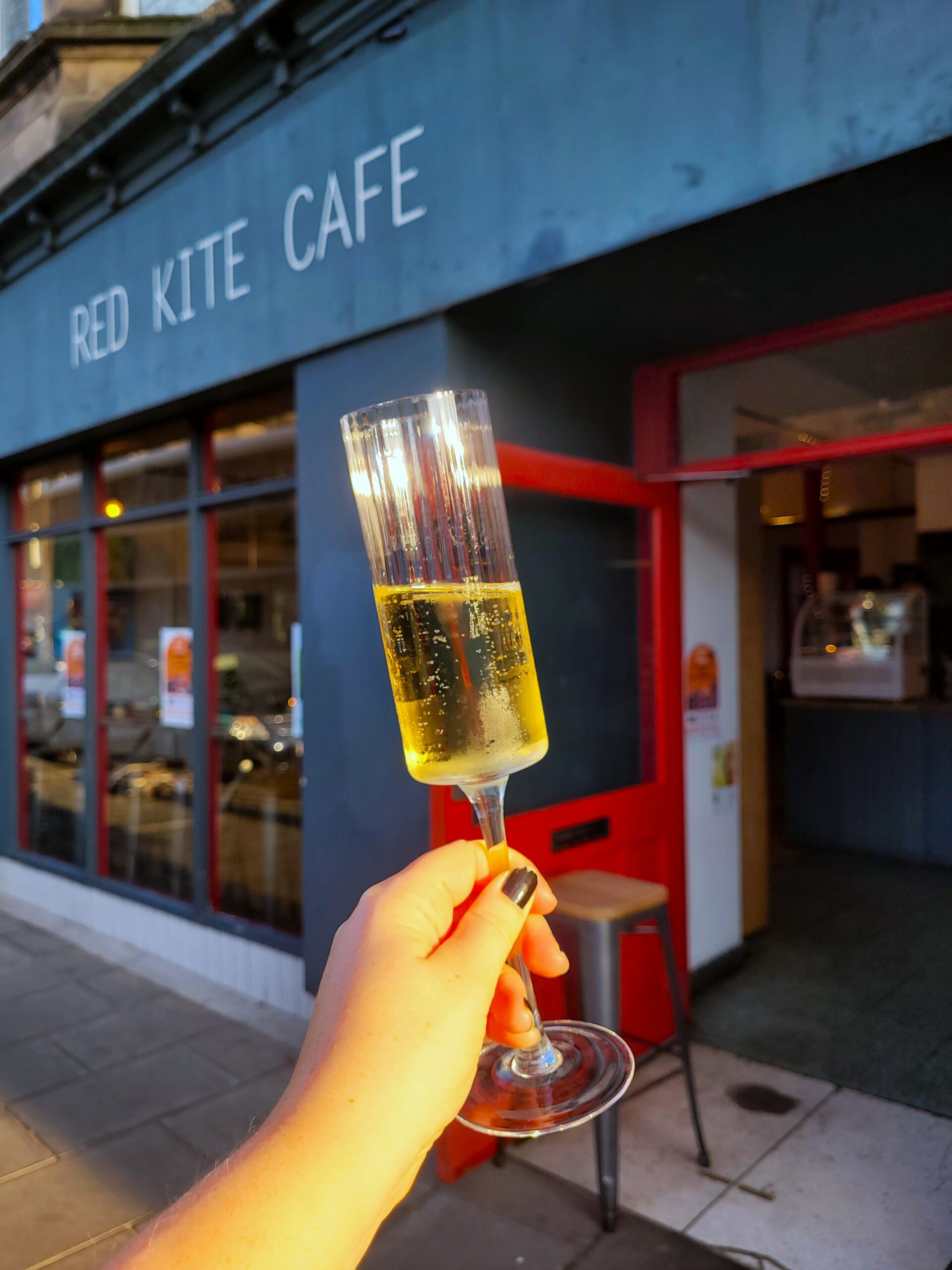
Spring is here, and with the change of the seasons comes our next Bistro Night! In this post Head Chef Euan McBride talks about his process, and we cover what to expect from Bistro Nights and how you can incorporate more seasonal eating into your life.
So what are Bistro Nights?
Each dining experience is a six-course set menu inspired and crafted from the best of Scotland’s seasonal produce. The evenings are a fantastic way for us to connect with our customers, while providing them with a fine dining experience at a more affordable price point. They’re an evening service, designed by Euan to showcase the best of the seasonal produce Scotland has to offer. Sustainability and eco-friendly practices are important to us at the Red Kite, so we care deeply about our suppliers and the provenance of our ingredients. In Scotland we are blessed with rich seas, ancient woodland, and verdant farmland; our natural larder is brimming with seasonal produce for us to enjoy.
Let’s get into seasonal eating…
Seasonal eating involves changing your diet and consuming food to suit what is abundant and naturally produced in time with the season throughout the year. There are many benefits to this: it reduces your carbon footprint, seasonal food will be cheaper in the supermarkets, and also more flavourful and nutritious, and it supports the local economy!
From the first frosts of autumn to the long summer sun, the diverse climate in Scotland creates a distinct crop each season year-round. In Summer, berries and seafood; Autumn has apples, game, and harvest flavours for stews and soups; Winter features root vegetables and gamey roasts, while Spring is best for fresh greens, shellfish, and early berries.
This Friday is our Spring Bistro, so you can expect to savour some key spring produce such as lamb, spring greens, cheeses from the kidding season, and sweets like rhubarb and early berries.
As you can see, we have some stand out, seasonal ingredients across the evening:
Scallops/Salmon
Scotland has some of the best and freshest seafood in the UK, thanks to our deep lochs and 12,000km of rich coastline. Salmon is a well-known staple of our aquatic larder, but scallops are a bit of an unsung hero. Their sweet and delicate flavour requires minimal cooking, and are commonly paired with the fresh, sweet spring vegetables coming into season. March is the last chance to try King Scallops fresh from their winter season, before Queen Scallops come again in the Autumn.
Wild Garlic
Have you ever been on a walk and suddenly felt like you were in a French larder? You would have likely been surrounded by Wild Garlic, its short season in full bloom in March before it turns bitter later in the spring. It thrives in ancient woodland, and looks like daffodils without the flowers. It is also similar to the poisonous lily of the valley, so if in doubt, trust your nose! If it doesn’t smell strongly of garlic, don’t eat it. Pick the leaves, but leave the flowers and bulbs so the plant can survive another season. It’s great in pastas, pestos and soups.
Hogget
Hogget is the little-known period of lamb before it becomes mutton; it has a richer and deeper flavour than lamb, but it’s less intense and more tender than mutton. It’s also a more sustainable meat option; buying lamb in spring means that the animal was born in winter, and would have lived almost entirely indoors being fed stored hay, whereas hogget was born the previous year and had the previous summer to fatten up naturally. If you want to use hogget in your own cooking, simply substitute hogget for lamb in any recipe.
Rhubarb
March is the perfect time to enjoy forced rhubarb, an early-season variety that is grown in total darkness causing a faster growth rate as the plant searches for light. This results in sweeter, less fibrous stalks than wild rhubarb, which comes into season later in April. It’s abundant, cheap, and easy to prepare, and it’s great in crumbles and jams, but stay away from the poisonous leaves!
If you want to read more about how to eat seasonally year-round in Scotland, head to:
https://www.visitscotland.com/things-to-do/food-drink/seasonal-food-calendar
________
A chat with Euan about his process and how he designs the menu:
(answers have been edited for clarity)

Q: Talk me through the menu quickly, and is there anything that you want people to notice or particularly stand out?
A: So, the canape is croustade which is a nice little fried tartlet. The inspiration for that one is a cheese and onion crisps; they’re my favourite! We’re using Isle of Mull cheddar, and instead of just regular onion as the allium it’s spring onion – I thought it was nice to start the spring menu with quite literally the word “spring”. It’s served in a little crisp shell, so you’ve got that nice crunch.
The first course is a tomato consommé, we’re using cherry vine tomatoes in particular. If you’re unfamiliar, consommé is just a really clarified broth – this one’s quite traditional with shallots and garlic, and then it’s allowed to gravity strain through a muslin cloth; the liquid that you get the result of that is the consommé. It’ll be garnished with a house-made lemonbalm oil, which is a bitter yet citric herb. The consommé will be served warm; it can be served either hot or cold – it depends on the season, but we’re going warm because it’s not as freezing as it has been in Edinburgh lately, but also if you serve it at too high a temperature you begin to lose clarity of the flavour; it’s strong but delicate.
The next course is where we can divide off; the meat course is a hand-dived scallop – perfect at this time of year – with a sweetcorn velouté because it matches the sweetness of the scallop flesh. They’ll just be very traditionally pan-seared and it’s going to be garnished with dulse (a dried seaweed) and lovage, which is just coming into season at this time of year, it’s another nice very aniseed-like herb, that we’ve foraged from our café garden downstairs.
The vegetarian option is a marinated tofu that resembles a filet of salmon – I don’t often like vegetarian dishes that are just aping meat, but this one is quite fun. It’s a really nice way to use tofu and it’ll be served on a punchy ponzu (a very citric, rich, and thin sauce) and some pickled Shimeji mushrooms.
The main for the meat eaters will be Hogget, which is between lamb and mutton; hogget is traditionally categorized as when the lambs begin to develop their first 2 teeth so it’s either first or second spring lamb. It’s really delicious, because you get the best of both worlds; you get a bit more depth of flavour without that real maturity of mutton, but you still get a lot of the robust fat content of lamb.
The vegetarian main course is a wild garlic Malfatti (similar to arancini but without rice) made with wild garlic that I foraged. That’s going to be served with strips of polenta-crust halloumi, with preserved lemon dressing and a wild garlic pesto; it’s almost like a cheese board but not ridiculous to offer as a main course. The preserved lemon is really sharp and really acidic and that will be blitzed with honey so that’ll cut through all the fattiness going on. She’s just a cheese board really! I’m joking – it’s a homage to my friend Nick who is the worst vegetarian in the world because all he eats is pizza and cheese! He’s coming tomorrow so I kind of designed the dish for him, and I’m sure the rest of the guests will thank him for it because it’s delicious!
The idea of a pre-dessert is a palette cleanser to clear away all the fat of the savoury dishes, and refresh the palette ready for the sweet course, ours is a very simple, really tart gooseberry compote in a meringue nest that just wakes you up; the dessert’s really rich so it’s a nice counterpoint.
Finally the dessert is almost like an opera cake; we have layers of Joconde sponge with a rhubarb and white chocolate ganache, as rhubarb’s in season. We’ve got some really nice Scottish raspberries for a raspberry galette, and then a little bit of brown butter chantilly cream on the side and that should make everyone roll home!
It should be a nice kind of set meal for everyone with slightly lighter elements coming in – because of spring you tend to get a lot more brighter flavours. The way the menu has been developed is the things that grow together tend to go together.
Q: When designing the menu, do you think about key ingredients and then build combinations from there, or do you focus on flow through the courses?
A: A bit of both – you don’t want to overwhelm people too closely at the start of the menu. The first canape is quite big because it’s got a lot of cheese in it, but then that’s counterbalanced with spring onion, that really lifts it into sweetness. So, then the next course is a broth; really clarified, very thin, very light on the palette and quite refreshing – you get to rehydrate a little bit.
The way I look at a dish is to find the main element – I knew I wanted to use hogget because it’s one of my favourite proteins, and scallops are great at this time of year. Then you look at what flavours go well, what’s in season, and kind of build a dish. There’s classics you know – mint! Mint sauce really goes with lamb, everyone knows it, so it’s how you play with that and make it a little bit more interesting. Classic combinations are classics for a reason; not trying to reinvent the wheel for this kind of menu, because it’s for our locals.
It’s all honest process – Edinburgh’s got quite a particular fine dining scene, so I like to think about it as an elevated bistro, that’s generous but still considered. There’s a reason everything’s on the plate; there’s no unnecessary garnish; there’s no bells and whistles; it’s not show-offy. The process is very evident there, and things should taste like what they are, not of taking this and turning it into something else, like what’s the point? Bistro Nights are about showcasing the best of Scotland’s seasonal produce, we don’t need to muddy the waters.
_______
Our next Bistro Night will be in the summer before the Edinburgh Fringe Festival starts, so keep your eyes peeled on our Instagram and in the cafe for the announcement!
Leave a Reply